



Том 4, № 139 (2025): Известия российской академии ракетных и артиллерийских наук
- Год: 2025
- Статей: 22
- URL: https://medbiosci.ru/2075-3608/issue/view/24755
Статьи
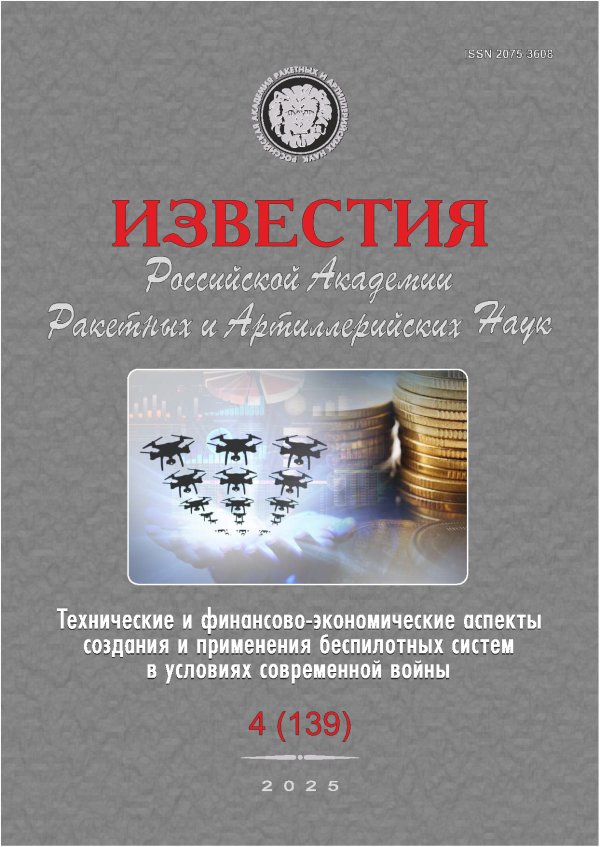
Технические и финансово-экономические аспекты создания и применения беспилотных систем в условиях современной войны
Аннотация
Рассматривается задача цифровизации военной экономики Российской Федерации в аспектах развития в нашей стране сквозных цифровых технологий в межкорпоративной среде оборонно-промышленного комплекса (ОПК). Показано, что решение задачи цифровизации военной экономики неразрывно связано с осуществлением цифровой трансформации экономических агентов ОПК.
 3-11
3-11


Цифровизация военной экономики россии в аспектах развития сквозных цифровых технологий
Аннотация
В статье рассматривается задача цифровизации военной экономики Российской Федерации в аспектах развития в нашей стране сквозных цифровых технологий в межкорпоративной среде оборонно-промышленного комплекса (ОПК) России. Показано, что решение задачи цифровизации военной экономики неразрывно связано с осуществлением цифровой трансформации экономических агентов ОПК.
12-15
Совершенствование информационного обеспечения организационно-технических систем специального назначения — необходимое условие их эффективного применения
Аннотация
В статье обосновывается необходимость совершенствования информационного обеспечения организационно-технических систем специального назначения (ОТС СН) за счет применения космических аппаратов (КА) дистанционного зондирования земли (ДЗЗ). С этой целью проводится краткий ретроспективный анализ применения космических аппаратов подобного класса. На основе проведенного анализа обосновывается способ наращивания информационных возможностей ОТС СН за счет отечественной орбитальной группировки путем оперативного развертывания низкоорбитальной многоспутниковой группировки на основе малоразмерных космических аппаратов (МКА) в качестве функционального дополнения.
16-21
Распределенная активная фазированная антенная решетка с синтезированной стохастической апертурой на базе роя малых космических аппаратов
Аннотация
В статье представлена концепция распределенной космической активной фазированной антенной решетки (АФАР) на базе роя малых космических аппаратов (МКА). Ключевое отличие — принцип стохастической синтезированной апертуры: каждый МКА оцифровывает I/Q-сигналы с привязкой времени и координат. Центральный кластер выполняет синхронизацию, калибровку, компенсацию фаз и формирование луча. Это открывает путь к глобальным, реконфигурируемым системам нового поколения, более гибким и отказоустойчивым, чем монолитные космические аппараты.
22-31
Определение поправки в угол бросания для попадания в цель на заданной высоте
Аннотация
Дано решение задачи об определении угла бросания снаряда для попадания в цель на заданной высоте, актуальность которой определяется отсутствием аналитического выражения для траектории боеприпаса. Имеется математическая модель движения снаряда в воздухе в виде системы дифференциальных уравнений. Предлагаемый метод основан на интегрировании системы уравнений плоского движения снаряда в воздухе.
32-36
Методика расчета вероятностно-временных характеристик потока командно-программной информации в многоуровневых иерархических системах управления
Аннотация
Разработана методика оценивания вероятностно-временных характеристик потока командно-программной информации в многоуровневых иерархических системах управления. При моделировании прохождения сигналов учитываются ограничения, обусловленные цикличностью движения потребителей целевой информации. Разработанная методика включает реализацию имитационных циклов и требования к вероятности предотвращения несанкционированного доступа в автомтизированные системы управления (АСУ).
37-43
Методика актуализации прогнозной информации на основе байесовского подхода
Аннотация
Представлена методика актуализации прогнозной информации, в основу которой положено применение формулы Байеса для уточнения апостериорной вероятности прогнозируемых событий по мере поступления новых данных, свидетельствующих об их правдоподобии. Приведено содержание этапов реализации методики с практическими примерами для количественных и качественных оценок. Предложены варианты визуализации результатов прогнозирования и их интерпретация.
44-49
Научно-методический подход к оценке эффективности системы охраны объекта управления
Аннотация
Рассмотрены основные факторы, влияющие на эффективность функционирования системы охраны объекта управления, особенности применения инженерно-технических средств с учетом возможных моделей нарушений, обоснован обобщенный критерий эффективности системы охраны, позволяющий управлять безопасностью объектов системы управления, и порядок его определения.
50-56
Научные основы конструирования ультрафиолетовых блоков очистки воды в интересах создания перспективных средств полевого водообеспечения
Аннотация
С использованием теоретических представлений о фотохимических процессах детоксикации боевых отравляющих веществ в воде под действием ультрафиолетового излучения в присутствии сильных окислителей даны основные принципы и математические выражения, позволяющие проводить расчеты и конструировать блоки фотохимической очистки воды в составе средств полевого водообеспечения, и обосновывать их оптимальные режимы работы.
57-65
Динамический тренажер боевой подготовки расчета бронетранспортера
Аннотация
В статье рассмотрена структура построения динамического тренажера для подготовки боевых расчетов бронетранспортера БТР-80А. Представлена структурная схема динамического тренажера и его составных частей. Обучение на данном тренажере проходит в условиях синтезированной фоно-целевой обстановки с имитацией динамического подобия движения бронетранспортера по пересеченной местности.
66-75
Разработка устройств для защиты от взрыва для локализации подрыва зарядов взрывчатого вещества до 10 кг в тротиловом эквиваленте
Аннотация
Рассмотрен вопрос разработки модульных устройств для защиты от взрыва для локализации подрыва зарядов взрывчатого вещества до 10 кг в тротиловом эквиваленте. Установлено, что конструкция, состоящая из восьми облегченных боковых секций, более эффективно снижает уровень избыточного давления во фронте воздушной ударной волны, нежели конструкция, состоящая из четырех утяжеленных боковых секций.
76-84
Согласование углов наведения в системе подачи корабельных артиллерийских установок
Аннотация
В статье формализовано описание системы подачи современных корабельных артиллерийских установок, имеющих патронную подачу, составлена её обобщенная схема. Рассмотрен вопрос бесперебойной подачи боеприпасов на линию досылки при непрерывной наводке орудия. Проведено сравнение основных корабельных артиллерийских установок, в которых использована подача по оси поворотной части.
85-89
Обоснование облика унифицированной системы дистанционного и мобильного мониторинга объектов хранения токсичных и взрывопожароопасных веществ
Аннотация
Приведены результаты исследования возможности создания и обоснование облика унифицированной системы дистанционного и мобильного мониторинга объектов хранения взрывопожароопасных и токсичных веществ путем использования перспективных акустического и импульсно-термокаталитического методов и детекторов на их основе, способных обнаруживать предельно допустимые и взрывоопасные концентрации паров. Показано, что разработанные детекторы позволяют решать задачи контроля предельно допустимых и довзрывоопасных концентраций компонентов жидких ракетных топлив и углеводородных горючих.
90-96
Исследование возможности применения алгоритмов кластеризации для типизации аэродинамических компоновок образцов ракетного оружия
Аннотация
В статье рассмотрена проблема формирования исходных данных для проведения внешнебаллистического проектирования летательных аппаратов, а именно формирования аэродинамических характеристик (АДХ) проектируемого летательного аппарата. Предложен подход к формированию АДХ, приведен пример использования предлагаемого подхода, дана оценка применимости предлагаемого подхода к решаемой задаче.
97-103
Оценка эффективности бортового радиолокационного датчика цели x-диапазона радиоволн с линейной частотной модуляцией
Аннотация
Рассмотрена методика математического моделирования входного сигнала бортового радиолокационного датчика цели с линейной частотной модуляцией от сложной цели на основе ее многоточечной модели. Показана возможнность оценки координаты срабатывания бортового радиолокационного датчика цели с линейной частотной модуляцией при заданных условиях встречи с целью. Приведены численные оценки вероятности срабатывания бортового радиолокационного датчика цели с линейной частотной модуляцией по истребителю F-22 Raptor.
104-109
Методика оценки эффективности перспективных образцов миноискателей в интересах инженерных войск
Аннотация
На основе подхода к оценке эффективности перспективных миноискателей с использованием функции бета-распределения приводятся результаты их определительных натурных испытаний, формулируется критерий эффективности, приводятся математические выкладки по определению объемов испытаний. Даются предложения по методике проведения испытаний, а также рекомендации по расчетам показателя эффективности в виде вероятности обнаружения мины с заданной достоверностью и дополнительных эксплуатационных показателей.
110-116
От колес к воздуху: перспективы применения пилотируемых дронов в штурмовых подразделениях
Аннотация
В современных конфликтах активно используются беспилотные летательные аппараты (БПЛА) как ключевые элементы боевых и обеспечивающих систем [1–4]. Также возможен широкомасштабный ввод в эксплуатацию малогабаритных пилотируемых воздушных судов, таких как аэробайки и мультикоптеры. Статья посвящена поиску эффективных методов применения пилотируемых воздушных судов в современных военных условиях.
117-126
Пассивные антитепловизионные покрытия модульного типа
Аннотация
В работе разработаны теоретические и практические аспекты реализации пассивной антитепловизионной защиты объектов на основе унифицированного антитепловизионного модуля. Предложены конструкции и теплофизические модели модулей, а также оценка качества антитепловизионных покрытий. Изготовлены образцы модулей и проведены их тепловые экспериментальные исследования. Описаны перспективы применения таких покрытий.
127-133
Разработка и исследование метода построения библиотек прецедентов
Аннотация
При решении сложных военно-технических задач в активно противодействующих средах целесообразно использовать метод прецедентов – поиска решений в окрестности известных. Разработана и реализована в объектно-реляционной базе данных библиотека прецедентов группового управления, структура которой определяется логико-лингвистической моделью прецедентов. Сформированы алгоритмы поиска ближайших прецедентов по критериям полноты, важности и сущности.
134-143
У истоков создания носителей ядерного оружия. Часть III. Ракетное топливо
Аннотация
В послевоенные годы, в условиях «холодного» противостояния, интересы науки, ученых оборонного комплекса, безопасности переплелись плотно и неразрывно, как нигде в мире. Одной из стратегических задач было создание такого ракетного топлива, которое бы позволило межконтинентальным ракетам достичь поставленных целей. На основе архивных и других источников в статье раскрываются этапы решения этой задачи, ученые коллективы, в этом участвующие.
144-147
Битва за глубину. Выпускники балтийского государственного технического университета «ВОЕНМЕХ» ИМ. Д.Ф. УСТИНОВА в ходе строительства и испытаний глубоководных подводных лодок (1974–1989 гг.)
Аннотация
На основе архивно-документальных исследований рассмотрены вопросы процесса создания и поэтапных испытаний отечественных глубоководных подводных лодок в период 1974–1989 гг., в которых активное участие принимали выпускники БГТУ «Военмех» им. Д.Ф. Устинова. Представлен их вклад в создание систем аварийного всплытия подводных лодок, основанных на использовании давления пороховых газов.
148-157
Опыт создания военных комендатур связи в годы Великой Отечественной войны и его влияние на развитие системы военной связи
Аннотация
Статья посвящена опыту создания и функционирования военных комендатур связи в период 1941–1946 гг. В ней на основе архивных источников, материалов и документов органов государственного и военного управления, мемуаров и выступлений в периодической печати, раскрыты вопросы развития нормативно-правовой базы, организационной структуры и особенности боевого применения военных комендатур связи. В статье показано влияние обобщенного опыта функционирования военных комендатур связи на развитие системы военной связи.
158-167