






 Email this article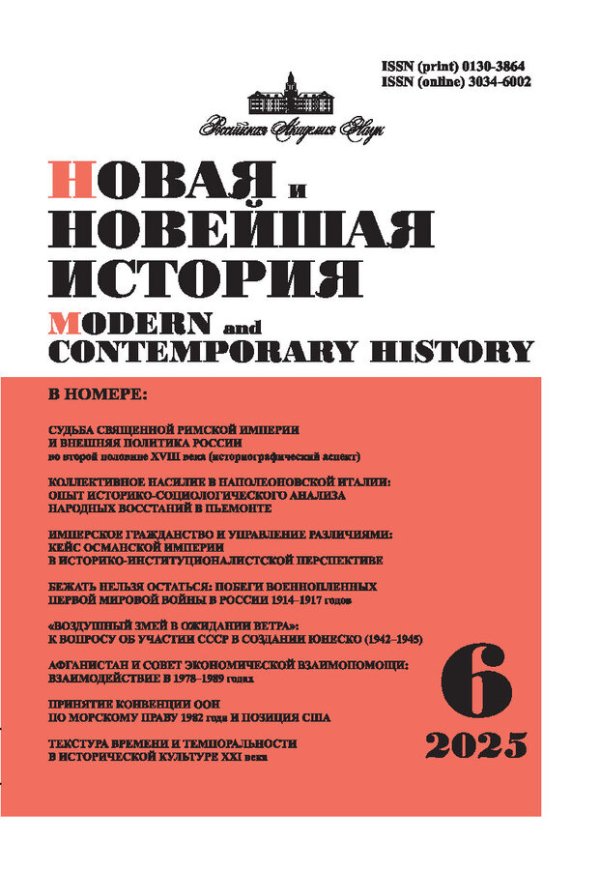
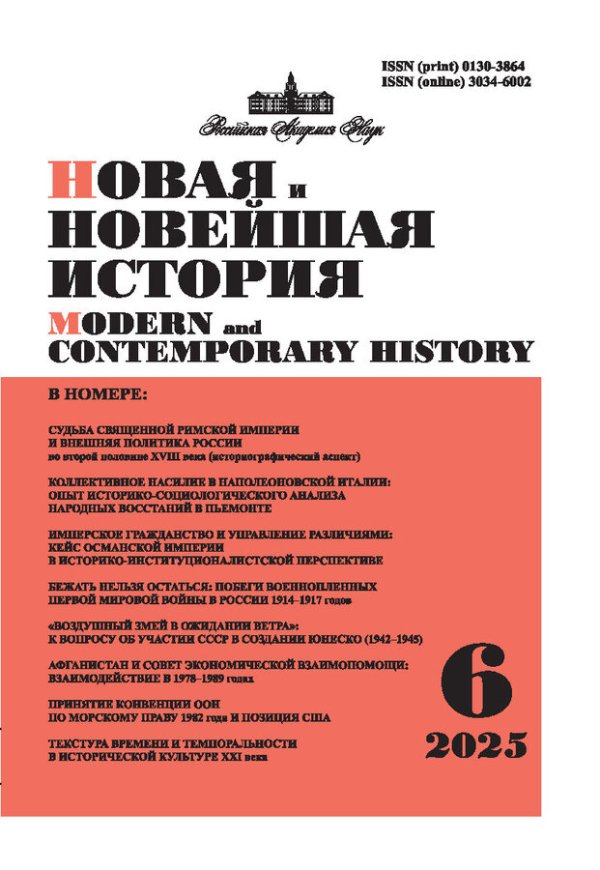
The Adoption of the 1982 UN Convention on the Law of the Sea and the Position of the United States
- Authors: Gigolaev G.E1
-
Affiliations:
- Institute of World History, Russian Academy of Sciences
- Issue: No 6 (2025)
- Pages: 179-189
- Section: 20th century
- URL: https://medbiosci.ru/0130-3864/article/view/360472
- DOI: https://doi.org/10.7868/S0130386425060146
- ID: 360472
Cite item
 Open Access
 Access granted
 Subscription Access

Abstract
This article analyses the diplomacy of the United States during the eleventh session of the Third United Nations Conference on the Law of the Sea, which concluded with the adoption of the 1982 Convention. Drawing on declassified materials from the US Department of State and official UN records, the study reconstructs the evolution of Washington’s position under the Reagan administration. It demonstrates that the United States sought to safeguard its commercial and strategic interests in the exploitation of deep seabed resources and to resist provisions inspired by the New International Economic Order, which favoured developing states. Despite efforts to build an alternative regime together with its Western allies, the US delegation failed to secure support for its amendments to Part XI of the draft Convention. The analysis shows that the decision to call for a formal vote was less an act of diplomatic calculation than a declaration of principle that revealed the limits of American influence within a shifting global order. The article situates these developments within the broader context of Cold War politics and the transformation of US ocean policy in the early 1980s.
About the authors
G. E Gigolaev
Institute of World History, Russian Academy of Sciences
Author for correspondence.
Email: g.e.gigolaev@yandex.ru
Scopus Author ID: 57204910297
Moscow, Russia
References
- Vojtolovskij F.G. The Unity and Disunity of the West: The Ideological Reflection of the Transformations of the Political World Order in the Consciousness of the U.S. and Western European Elites, 1940–2000s. Moscow, 2007.
- Garbuzov V.N. Ronald Reagan's Revolution. Moscow, 2008.
- Gigolaev G.E. The Third United Nations Conference on the Law of the Sea and the Administration of Ronald Reagan in the United States // Istoriya. 2021. Vol. 12. Iss. 11 (109). DOI: https://doi.org/10.18254/S207987840017634-6
- Gigolaev G.E. American Diplomacy on the Eve of the Adoption of the UN Convention on the Law of the Sea: Evolution of the Position // Istoriya. 2023. Vol. 14. Iss. 12 (134). Pt. II. DOI: https://doi.org/10.18254/S207987840029711-1
- Gudev P.A. The United Nations Convention on the Law of the Sea: Problems of Regime Transformation. Moscow, 2014.
- Foreign Relations of the United States, 1981–1988. Vol. XLI. Global Iss. II. U.S. Department of State. Office of the Historian. URL: https://history.state.gov/historicaldocuments/frus1981-88v41 (дата обращения: 01.08.2025).
- Haimbaugh Jr., George D. Impact of the Reagan Administration on the Law of the Sea // Washington & Lee Law Review. 1989. Vol. 46. Iss. 1. P. 151–200.
- Larson D.L. The Reagan administration and the law of the sea // Ocean Development & International Law. 1982. Vol. 11. Iss. 3–4. P. 297–320.
- Third United Nations Conference on the Law of the Sea (1973–1982). Vol. XVI. Eleventh Session // URL: https://legal.un.org/diplconf_records/1973_los/vol16.shtml (дата обращения: 01.08.2025).
Supplementary files
