





 Email this article
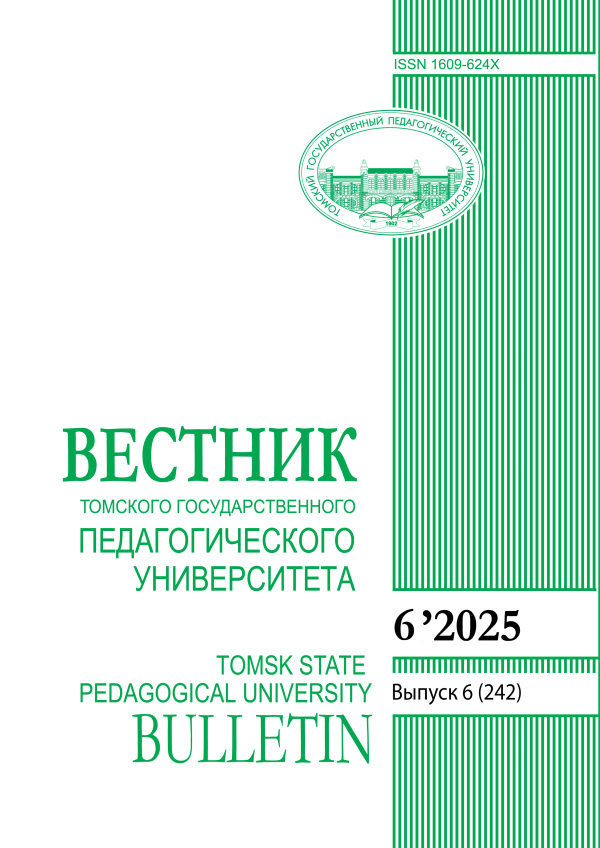
 The moral maturation plot in the short stories of the A. Shteiger
- Authors: Davydov S.N.1
-
Affiliations:
- National Research Tomsk State University
- Issue: No 6 (2025)
- Pages: 135 - 145
- Section: RUSSIAN AND WORLD LITERATURE
- URL: https://medbiosci.ru/1609-624X/article/view/359802
- DOI: https://doi.org/10.23951/1609-624X-2025-6-135-145
- ID: 359802
Cite item
Full Text

Abstract
The article presents the results of a study of the moral maturation plot in the short stories of the poet Anatoly Shteiger “Bricks” (1933) and “The Jew” (1934). Shteiger is one of the main representatives of the “Paris note”, the leading young émigré literary movement that promoted the aesthetics of the “human document” as optimal for Russian youth who had lost their homeland and were experiencing a spiritual crisis. Shteiger’s stories, on the one hand, are inscribed in the poetic system of this author, which makes them representative of his unique creative worldview, and on the other hand, they exist in the context of short fiction of the influential magazine “Numbers”, which published the works of the “young” and became the place of crystallization of the pessimistic worldview and ego-documentary poetics of the “Paris note”. The central problem of the fiction of “Numbers” is the problem of personal and generational self-determination: the vital and creative super-task of young emigrants consists of integration into the surrounding reality, which, being represented by the space of the modern multinational industrial West, is perceived by them as alien and hostile. In the stories of Shteiger, the condition for the autobiographical and autopsychological hero to find “his place” in the world is the establishment of a spiritual dialogue with the character-Other, in whose image the ideal hypostasis of the author’s alter ego is objectified. Growing up for Shteiger’s heroes means realizing themselves in the outside world, while remaining faithful to universal humanistic values. Interaction with the ideal Other constitutes a test for the hero’s developing morality, which he is unable to withstand due to spiritual weakness, ontologically inherent in all people and at the same time being a property of his nature, revealed in a situation of moral choice. In turn, the ethical ideal (and God as its personification) is depicted by Shteiger as transcendental to the earthly world, and its embodiment in the image of an initially imperfect person is of a transitory or illusory nature. The unattainability of the Absolute, according to Shteiger, is the cause of universal moral relativism and the internal discrepancy between the heroes and their social and cultural status.
About the authors
Stepan Nikolaevich Davydov
National Research Tomsk State University
Author for correspondence.
Email: stepan.7plus@yandex.ru
Tomsk, Russian Federation
References
- Chisla. Kniga 7–8 [Numbers. Book 7–8]. Paris, Cahiers de l’Étoile, 1933. 306 p. (in Russian).
- Letaeva N.V. Molodaya emigrantskaya literatura 1930-kh godov: proza na stranitsakh zhurnala “Chisla”. Dis. kand. filol. nauk [Young émigré literature of the 1930s: prose on the pages of the magazine “Numbers”. Diss. cand. philol. sci.]. Moscow, 2003. 180 p. (in Russian).
- Korostelev O.A. “Parizhskaya nota” i protivostoyaniye molodezhnykh poeticheskikh shkol russkoy literaturnoy emigratsii [“Paris Note” and the Confrontation of Youth Poetic Schools of the Russian Literary Emigration]. Literaturovedcheskiy zhurnal – The Journal of Literary History, 2008, no. 22, pp. 3–50 (in Russian).
- Ratnikov K.V. “Parizhskaya nota” v poezii russkogo zarubezh’ya [“Paris Note” in the Poetry of the Russian Diaspora]. Chelyabinsk, Chelyabinsk State University Publ., 1998. 162 p. (in Russian).
- Chagin A.I. Gorizonty prekrasnoy yasnosti. Akmeizm, peterburgskaya shkola v 1920–1930-e gg. [Horizons of Beautiful Clarity. Acmeism, the St. Petersburg School in the 1920s–1930s.]. Moscow, IMLI RAN Publ., 2021. 320 p. (in Russian).
- Zobnin Yu.V. Poeziya “mladshego” pokoleniya [Poetry of the “younger” generation]. Literatura russkogo zarubezh’ya (1920-1940): uchebnik dlya vysshikh uchebnykh zavedeniy Rossiyskoy Federatsii [Literature of the Russian Diaspora (1920–1940): textbook for higher educational institutions of the Russian Federation]. Saint Petersburg, Filological fakulty SPbGU Publ., 2013. 848 p. (in Russian).
- Nazarenko I.I. Krizis samoidentichnosti v syuzhetakh prozy mladoemigrantov. Dis. kand. filol. nauk [Crisis of self-identity in the plots of prose by young migrants. Diss. cand. philol. sci.]. Tomsk, 2023. 345 p. (in Russian).
- Vasil’eva M.A. “Nezamechennoye pokoleniye” russkoy emigratsii: poiski svoyego mesta v mire [The “Unnoticed Generation” of Russian Emigration: Searching for Their Place in the World]. Fenomen pokoleniy v russkoy i vengerskoy literaturnoy praktike XX–XXI vekov [The Phenomenon of Generations in Russian and Hungarian Literary Practice 20th–21st Centuries]. Yekaterinburg, Ural university Publ.; Saint Petersburg, Aleteyya Publ., 2022. 444 p. (in Russian).
- Matveeva Yu.V. Samosoznaniye pokoleniya v tvorchestve pisateley-mladoemigrantov [Self-awareness of a generation in the works of young migrant writers]. Yekaterinburg, Ural university Publ., 2008. 196 p. (in Russian).
- Kaspe I.M. Iskusstvo otsutstvovat’: Nezamechennoye pokoleniye russkoy literatury [The Art of Absence: The Unnoticed Generation of Russian Literature]. Moscow, NLO Publ., 2005. 192 p. (in Russian).
- Chagin A.I. Puti i litsa: o russkoy literature XX v. [Paths and Faces: about Russian Literature of the 20th Century]. Moscow, IMLI RAN Publ., 2008. 600 p. (in Russian). URL: https://www.phantastike.com/ru/puti_i_litca_o_russkoi_literature_xx_ve/pdf/ (accessed 20 March 2025).
- Pachmuss Temira. Iz arkhivnykh materialov V.A. Zlobina: poet Anatoliy Shteyger [From the archival materials of V.A. Zlobin: poet Anatoly Shteiger]. Cahiers du monde russe et soviétique, 1985, vol. 26, no. 3-4, pp. 479–492 (in Russian).
- Ginzburg L. O psikhologicheskoy proze [About psychological prose]. Leningrad, Khudozhestvennaya literatura Publ., 1976. 448 p. (in Russian).
- Shteyger A. Etot den’: Izbrannoye [This day: Featured]. Moscow, Prestizh Buk Publ., 2017. 480 p. (in Russian).
- Kochetkova O.S. Problema vnutrennego i vneshnego prostranstva v sud’be i tvorchestve A.S. Shteygera [The problem of internal and external space in the fate and work of A.S. Shteiger]. Vestnik Moskovskogo universiteta. Seriya 9: Filologiya – Bulletin of Moscow University. Series I: Philology, 2010, no 2, pp. 81–94 (in Russian).
- Bakhtin V.S. “Kirpichiki”: istoriya pesni [“Bricks”: the history of the song]. Neva, 1997, no. 10, pp. 225–229 (in Russian).
- Neklyudov S.Yu. “Vse kirpichiki, da kirpichiki...” [“All bricks, and bricks...”]. Shipovnik. Istoriko-filologicheskiy sbornik k 60-letiyu R.D. Timenchika [Rosehip. Historical and philological collection for the 60th anniversary of R.D. Timenchik]. Moscow, Vodoley Publishers Publ., 2005. Pp. 271–303 (in Russian).
- Malkina V.Ya. Liricheskiy syuzhet [Lyrical plot]. Poetika: slovar' aktual'nykh terminov i ponyatiy [Poetics: verbal. actual. terms and concepts]. Moscow, Izdatel’stvo Kulaginoy; Intrada Publ., 2008. 358 p. (in Russian).
- Rubins M.O. Russkiy Monparnas. Parizhskaya proza 1920–1930-kh godov v kontekste transnatsional’nogo modernizma [Russian Montparnasse. Parisian Prose of the 1920s–1930s in the Context of Transnational Modernism]. Moscow, NLO Publ., 2017. 328 p. (in Russian).
- Varshavskiy V.S. Nezamechennoye pokoleniye [The unnoticed generation]. Moscow, Dom russkogo zarubezh’ya imeni Aleksandra Solzhenitsyna: Russkiy put’ Publ., 2010. 544 p. (in Russian).
Supplementary files
