





 Email this article
 Metaphor as a means of linguo-semiotic interpretation in music education discourse
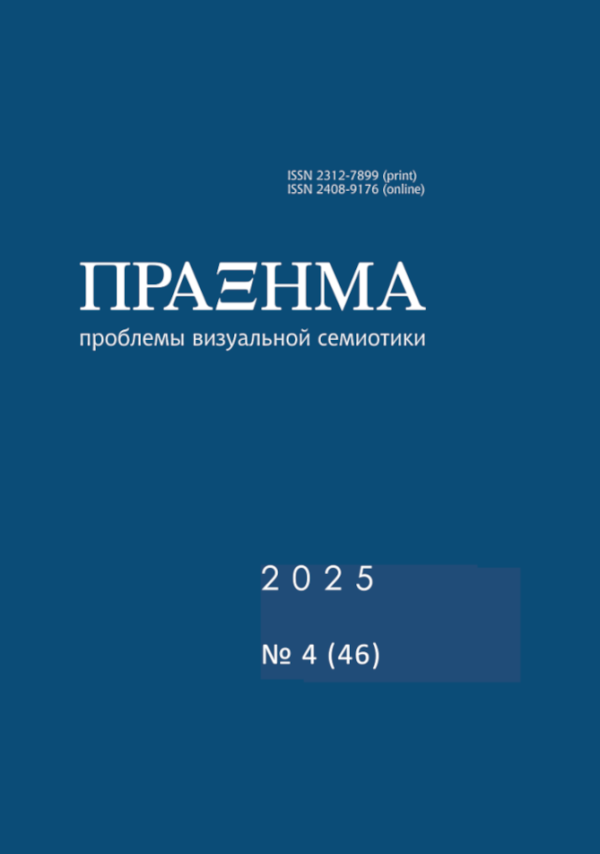
- Authors: Yermolenkina L.I.1, Ito F.2
-
Affiliations:
- Tomsk State Pedagogical University
- Sakuyo University
- Issue: No 4 (2025)
- Pages: 79 - 99
- Section: ARTICLES
- URL: https://medbiosci.ru/2312-7899/article/view/359748
- DOI: https://doi.org/10.23951/2312-7899-2025-4-79-99
- ID: 359748
Cite item
Full Text

Abstract
The interest of modern humanities In metaphor is determined by its modeling potential and ability to be a linguacognitive mechanism for the formation of national worldviews. The article addresses the challenge of achieving effective sociolinguistic communication within the framework of music education discourse, a hybrid domain that emerges at the intersection of educational and artistic institutions under conditions of intercultural interaction. The study aims to explore the mechanisms by which language becomes integrated into professional consciousness through the interplay of two semiotic systems—verbal and musical. The research objectives include identifying discourse-forming factors in academic communication and examining the role of metaphor as a key cognitive and linguistic tool for facilitating dialogue. The methodological framework combines discourse analysis with the theory of cognitive metaphor, enabling the interpretation of metaphor as a mechanism of intersemiotic transfer. The empirical basis of the study is derived from classroom observations of Japanese students from Sakuyo University (Kurashiki) enrolled in performance courses taught by professors from the Moscow State Tchaikovsky Conservatory. The analysis reveals ethnocultural barriers caused by differences in value systems, educational traditions, and communicative strategies characteristic of Russian and Japanese musical pedagogy. The findings indicate that metaphor-driven instruction enhances intercultural communication by bridging verbal and musical codes, activating associative thinking, and reducing psychological and linguistic barriers. Typical metaphoric expressions in Russian music pedagogy—such as “Play like an emperor” or “Glide as if on ice”—serve not only as interpretative tools but also as motivational triggers, providing students with a nuanced understanding of performance techniques and stylistic intent. These linguistic practices stimulate conceptual integration and foster skills in both musical interpretation and foreign language acquisition. The originality of the research lies in conceptualizing metaphor as a universal cognitive mechanism that underpins successful professional interaction and mediates the dynamic architecture of education discourse. Practical implications involve the application of metaphor-based techniques in teaching Russian as a foreign language within professional music programs, as well as in developing methodologies that combine verbal and non-verbal semiotic resources to promote interpretative and creative competencies. It seems that the competence base of international students can be strengthened by the skills of linguocultural analysis aimed at developing the ability to interpret the conceptual essence of a metaphor and its ability to convey linguocultural meanings in the communication process and within the limits of the text.
About the authors
Larisa Ivanovna Yermolenkina
Tomsk State Pedagogical University
Author for correspondence.
Email: arblar2004@rambler.ru
Tomsk, Russia
Fuki Ito
Sakuyo University
Email: sala.virtu.7007@gmail.com
Kurashiki, Japan
References
- Baisultanova, K. Sh., Gorbuleva, M. S., Melik-Gaykazyan, I. V., & Pervushina, N. A. (2024). A thought experiment for constructing a semiotic optimum in the classroom (based on the ethics lesson in the philosophy course). ΠΡΑΞΗMΑ. Journal of Visual Semiotics, 3, 37–57. (In Russian). 10.23951/2312-7899-2024-3-37-57
- Bonfeld, M. Sh. (2006). Muzyka: yazyk, rech’, myshlenie [Music: Language, speech, thinking]. Kompozitor.
- Cheremisin, A. M. (2004). Muzykal’no-kommunikativnoe sobytie: faktory formirovaniya muzykal’nogo diskursa [Musical-communicative event: Factors in the formation of musical discourse]. Philosophy Cand. Diss. Tambov.
- Chernyavskaya, V. E. (2009). Lingvistika teksta: polikodovost’, intertekstual’nost’, interdiskursivnost’ [Linguistics of the text: Policodeity, intertextuality, interdiscursivity]. Knizhnyi dom “LIBROKOM”.
- Chudinov, A. P. (2008). Kognitivno-diskursivnoe issledovanie metafory v tekstakh SMI [A cognitive-discursive study of metaphor in media texts]. In Yazyk sredstv massovoi informatsii [The language of mass media] (pp. 419–436). Akademicheskii Proekt; Al’ma Mater.
- Clark, H. (2005). On stochastic grammar. Language, 81, 23–56. https://doi.org/10.1353/lan.2005.0015
- Elistratova, G. B. (2003). Muzykal’noe myshlenie kak forma kreativnoi deyatel’nosti [Musical thinking as a form of creative activity]. Philosophy Cand. Diss. Saransk.
- Fauconnier, G., & Turner, M. (2008). Rethinking metaphor. In R. W. Gibbs, Jr. (Ed.), The Cambridge handbook of metaphor and thought (pp. 53–66). Cambridge University Press. https://library.mibckerala.org/lms_frame/eBook/Language%20and%20Theology/Metaphor/Gibbs%20-%20The%20Cambridge%20Handbook%20of%20Metaphor%20and%20Thought%20(CUP).pdf
- Gorbuleva, M. S. (2024). Semioticheskii optimum i tsvet: kontekstual’nye vyzovy v obrazovatel’nykh tekhnologiyakh [Semiotic optimum and color: Contextual challenges in educational technologies]. Tomsk State University Journal of Philosophy, Sociology and Political Science, 82, 297–301. https://doi.org/10.17223/1998863X/82/27
- Gorbuleva, M. S., & Melik-Gaykazyan, I. V. (2024). Vizualizatsii spetsifiki filosofskogo mirovozzreniya: obnaruzhenie semioticheskogo optimuma v podborke illustrativnogo materiala k otkrytoi lektsii [Visualizing the specifics of a philosophical worldview: Discovering the semiotic optimum in a selection of illustrative material for an open lecture]. ΠΡΑΞΗMΑ. Journal of Visual Semiotics, 1(39), 143–166.
- Gvozdevskaya, G. A. (2015). Yaponskaya traditsionnaya sistema muzykal’nogo obucheniya i perspektivy ee ispol’zovaniya v Rossii [The Japanese traditional system of music education and prospects for its use in Russia]. Znanie. Ponimanie. Umenie, 1, 264–270.
- Hanslick, E. (1854). Vom Musikalisch Schönen. Leipzig. http://www.koelnklavier.de/quellen/hanslick/_index.html
- Issers, O. S. (2015). Diskursivnye praktiki nashego vremeni [Discursive practices of our time]. Lenand.
- Kalashnikova, L. V. (2006). Metafora kak mekhanizm kognitivno-diskursivnogo modelirovaniya deistvitel’nosti (na materiale khudozhestvennykh tekstov) [Metaphor as a mechanism for cognitive-discursive modeling of reality (based on literary texts)]. Philology Dr. Diss. Volgograd State University.
- Kitazawa, M. (2020). Sound as metaphor. Kyoto University Press.
- Lakoff, G., & Johnson, M. (2004). Metafory, kotorymi my zhivem [Metaphors we live by] (A. N. Baranov, Trans.). Editorial URSS.
- Lotman, Yu. M. (2000). Semiostera [The semiosphere]. Iskusstvo-SPb.
- Melik-Gaykazyan, I. V. (2024). Semioticheskii optimum: novyi kontsept dlya myslennykh eksperimentov s informatsiei [Semiotic optimum: A new concept for thought experiments with information]. Tomsk State University Journal of Philosophy, Sociology and Political Science, 82, 302–315. https://doi.org/10.17223/1998863X/82/28
- Ortega y Gasset, J. (1991). Esse ob esteticheskikh temakh v forme predisloviia [Essay on aesthetic topics in the form of a preface]. In Estetika. Filosofiya kul’tury [Aesthetics. Philosophy of culture] (pp. 93–112). Iskusstvo.
- Pervushina, N. A. (2024). Pedagogicheskaya bioetika: oblast’ primeneniya “semioticheskogo optimuma” v usloviyakh tsifrovizatsii obrazovaniya [Pedagogical bioethics: The field of application of the “semiotic optimum” in the context of educational digitalization]. Tomsk State University Journal of Philosophy, Sociology and Political Science, 82, 316–321. https://doi.org/10.17223/1998863X/82/29
- Pickering, M. J., & Garrod, S. (2007). Automaticity in language production in monologue and dialogue. In A. S. Meyer, L. R. Wheeldon, & A. Krott (Eds.), Automaticity and control in language processing (pp. 1–20). Psychology Press.
- Rezanova, Z. I. (2010). Metaforicheskii fragment russkoi yazykovoi kartiny mira: idei, metody, resheniia [The metaphorical fragment of the Russian linguistic world view: Ideas, methods, solutions]. Tomsk State University Journal of Philology, 1(9), 26–43.
- Tkacheva, E. E. (2007). Muzykal’noe myshlenie sposob formirovaniya lichnosti uchashchikhsya [Musical thinking as a way of shaping students’ personality]. Izvestia: Herzen University Journal of Humanities & Sciences, 21(51), 302–308.
- Vladimirova, T. E. (2007). Prizvannye v obshchenie: Russkii diskurs v mezhkul’turnoi kommunikatsii [Called into communication: Russian discourse in intercultural communication]. KomKniga.
- Yakupov, A. N. (1995). Muzykal’naya kommunikatsiya (istoriya, teoriya, praktika upravleniya) [Musical communication (history, theory, management practice)]. Abstract of Art History Dr. Diss. Moscow.
Supplementary files
